ES
 EN
 RU
 FR
 PL


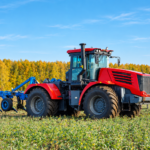
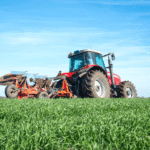
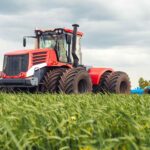
Agriculture implements do the field work while the tractor supplies the power. Row crop farms and horticulture farms ask different things of them, since one works wide fields of maize, beet or soya and the other narrow alleys between trees, vines and vegetable beds. Soils differ across Poland, Spain, France, Russia and Latin America too.
This guide covers matching agriculture implements to your tractor, row spacing and soil.
Start with the tractor you already own
Every implement has three numbers that must match your tractor. PTO horsepower, three-point linkage category, and hydraulic flow. A tiller rated for 60 to 80 HP will stall a 45 HP tractor in wet clay and wreck its gearbox inside a season.
Track width and ground clearance come next. Field tractors sit wide and tall, which suits maize and sunflower but keeps them out of orchard alleys. If you’re still choosing the machine, our guide to choosing the right tractor for farms in France covers the horsepower bands for mixed arable and vegetable work.
Agriculture Implements for Row Crops
Row crop farming runs on wide passes and repeat operations. Maize, sunflower, sugar beet, soya and potatoes follow much the same sequence, so the implement set follows the season.
Primary tillage comes from a mouldboard plough, a disc harrow, or a subsoiler where wheel traffic has compacted the ground. Seedbed work uses a power harrow or cultivator, and its width should match your planter and sprayer so you keep the same tramlines.
A pneumatic precision planter places seed at even spacing, which gives an even canopy and makes mechanical weeding possible later.
Inter-row cultivation is where most farms underspend. The cultivator has to match your row gap exactly, whether that’s 45 cm in sugar beet or 75 cm in maize, and the crop shields need to be tall enough to stop soil throw burying young plants.
A boom sprayer and flail mower finish the cycle. When pricing Agriculture Implements for Row Crops, the most useful figure to give your supplier is your row spacing in centimetres.
Agriculture Implements for Horticulture Farms
Horticulture changes the geometry. Orchards, vineyards, olive groves and vegetable beds have narrow alleys, permanent plants and shallow roots, so tools have to be slim, offset, or both.
Soil work between trees and vines usually means an offset rotary tiller or a narrow disc harrow mounted to one side, which keeps the tractor in the alley while the tool works close to the trunk line. Many growers add a hydraulic feeler arm so the implement swings clear when it touches a trunk.
A field boom sprayer can’t reach a canopy, so orchards and vineyards use air-blast or mist-blower sprayers instead. Alley grass and prunings go to a flail mower or mulcher, and vegetable growers add bed formers, transplanters and narrow hoes sized to beds.
Because all of this depends on tractor width, read our notes on the Best Tractor for Olive Farms and Vineyards before you commit to a set of Agriculture Implements for Horticulture Farms.
Row crop and horticulture implements compared
What to check | Row crop farms | Horticulture farms |
|---|---|---|
| Working width | 2 m to 6 m | 0.8 m to 1.8 m |
| Mounting | Centre mounted, front or rear | Often offset or side shift |
| Tractor type | Standard field tractor | Narrow track, orchard or vineyard |
| Key sizing figure | Row spacing, 45 cm to 80 cm | Alley width and trunk clearance |
| Main sprayer | Boom sprayer | Air blast or mist blower |
| Biggest risk | Compaction from wheel traffic | Trunk and root damage |
Five checks before you order
- Soil and moisture. Heavy clay needs more horsepower per metre than sandy loam, so ask for the draft requirement, not the width alone.
- Wear parts. Ask what shares, tines, discs or blades cost and how many hectares they last.
- Build quality. Check frame thickness, steel grade and weld finish rather than paint.
- Documentation. European buyers need CE marking and a declaration of conformity, plus linkage drawings so your workshop can confirm the fit.
- After-sales support. A good Agriculture Implement Export Company quotes spare parts with the machine and answers technical questions in your time zone.
Match the set to your region
Polish and Russian row crop farms work large blocks and heavier soils, so frame strength and width lead the decision. Spanish and southern French growers face stony ground and permanent crops, where offset tools and trunk clearance matter most, and Latin American farms often build the whole set around one mid-range tractor.
FAQs (Frequently Asked Questions)
Yes, if you size it for the narrowest alley you work and keep field implements within its PTO rating.
Ask for the draft or PTO requirement at your working depth and soil type, not the working width alone.
A tillage tool and a sprayer. Both earn their keep every season.
Yes. Linkage categories follow ISO standards, and we supply linkage drawings and CE documentation with every quotation.
Talk to us about your farm
Send Maquinaria SV your tractor model, your row or alley spacing, and the crops you grow. We’ll build an implement list that suits your soil and your season, with spare parts quoted upfront.
Get in touch for a quotation or call us on + 91 94273 12394 for more information.